Short-Spine Cereus jamacaru: Origin, Key Differences, How to Grow & Care, Flowering and Fruiting
Plant and Garden › Short-Spine Cereus jamacaru: Origin, Key Differences, How to Grow & Care, Flowering and Fruiting
24 Apr 2025 11:43
655 reads
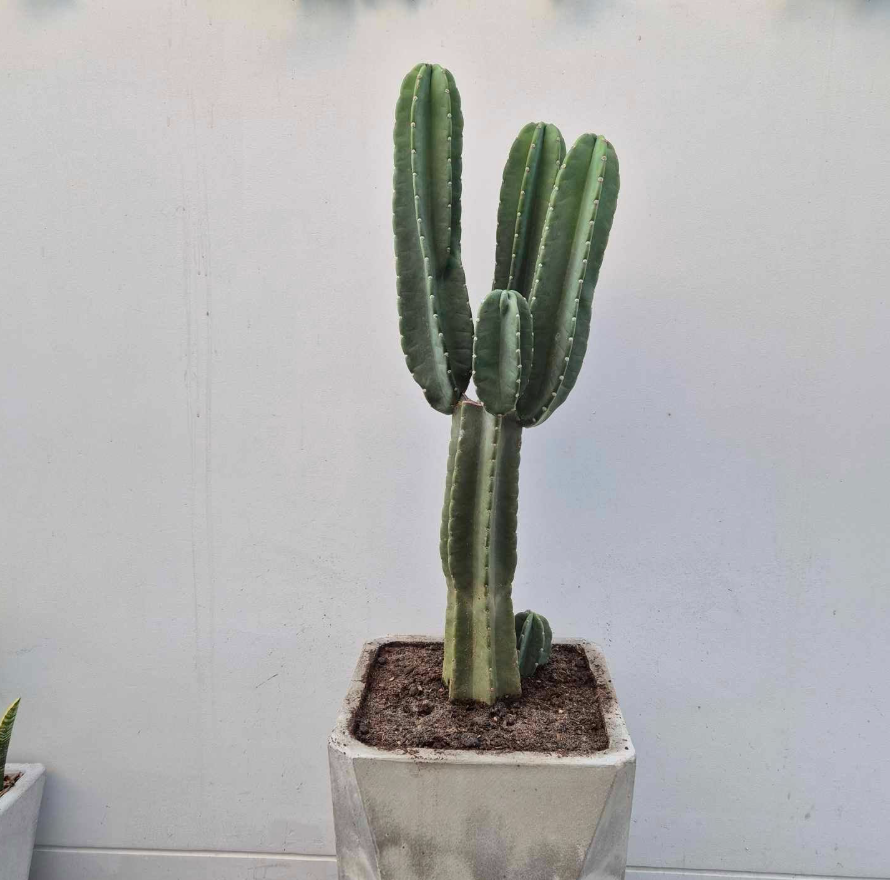
Short-spined Cereus jamacaru—now popular among collectors—originates from the standard long-spined form of Cereus jamacaru. Let’s get to know this striking cactus.

Origin of the Short-Spined Jamacaru
- The original species, Cereus jamacaru, is native to Brazil, especially tropical and semi-arid regions such as the Cerrado and Caatinga in northeastern Brazil.
- The short-spined form (often called “Short Spine”) is a natural mutation or a result of human selection, emphasizing unusual traits like:
- Very short spines or almost spineless ribs
- Plump, dense, sometimes asymmetric stems (quirky forms)
- It is widely propagated in Japan, Thailand, Korea, and China and is popular among mutant cactus collectors.
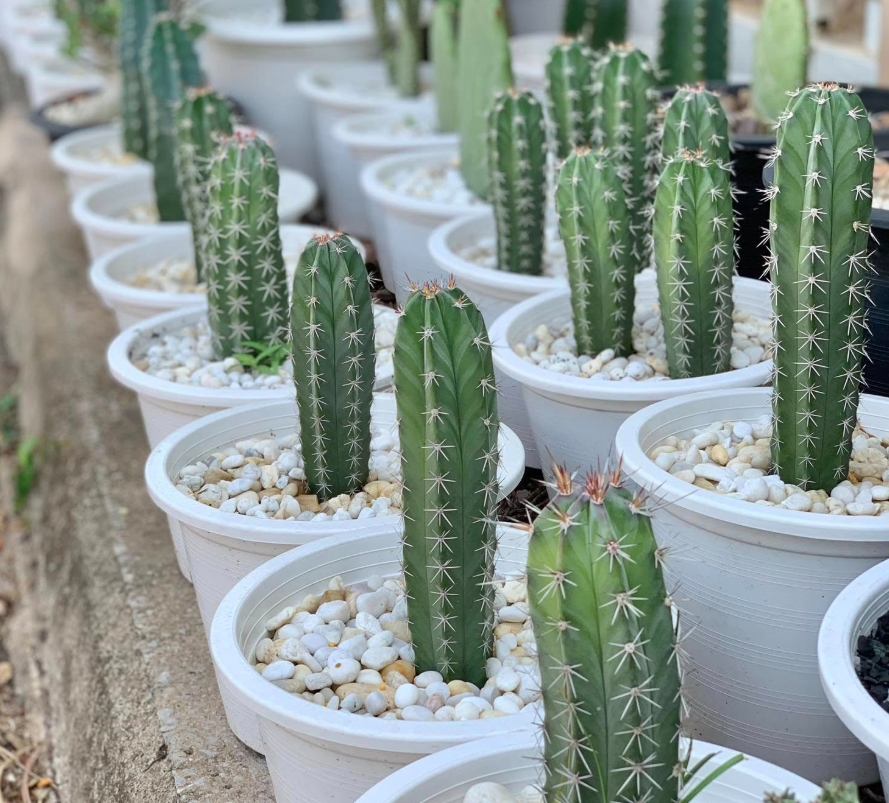
How It Differs from the Standard Form
| Trait | Standard Jamacaru | Short-Spined Jamacaru |
|---|---|---|
| Spines | Long, sharp, prominent | Very short or nearly absent |
| Stem | Tall, slender columnar form | Plumper, rounder, sometimes twisted |
| Color | Light to dark green | Deeper green with grayish hue; sometimes whitish marbling |
| Popularity | Common ornamental | Sought-after among “oddity” cactus collectors |
Growing in Thailand
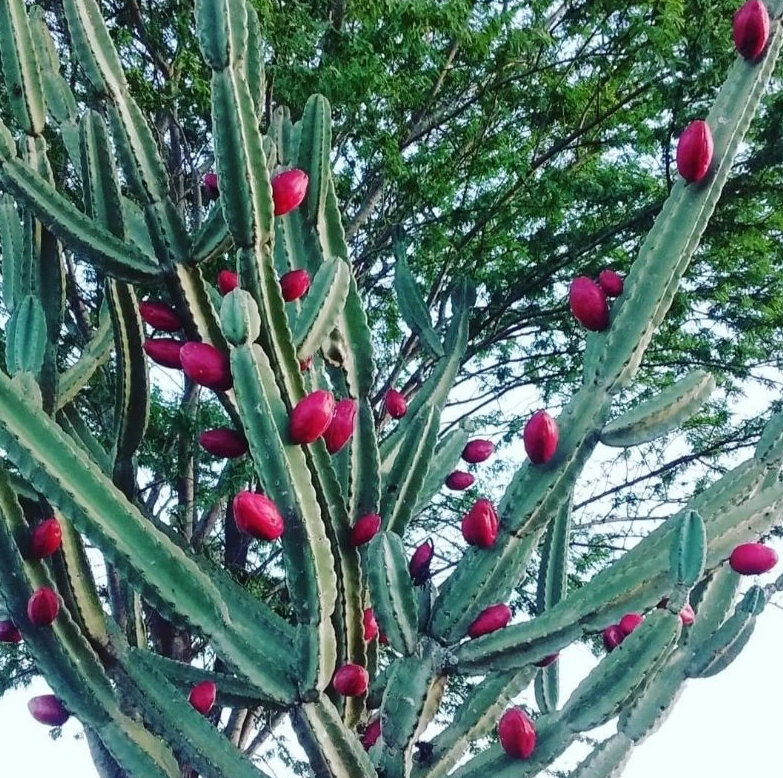
This species thrives in Thailand’s hot, humid climate. It is drought-tolerant and sun-loving, doing well in central and northeastern regions.
How to Propagate and Plant
- From seed: Soak seeds overnight; sow in a sandy, well-draining mix and keep slightly moist.
- From cuttings: Take healthy cuttings, let them callus for 2–3 days, then plant.
- Use deep pots or plant directly in the ground where space allows.
Care Tips
- Sunlight: Full, direct sun is ideal.
- Water: 1–2 times per week; avoid waterlogging.
- Soil: Sandy, well-draining cactus mix.
- Fertilizer: Balanced formula (e.g., 15-15-15) monthly during growth.
- Pests: Watch for mealybugs; inspect regularly.
Flowering and Fruit
- Blooms in late hot season into early rains.
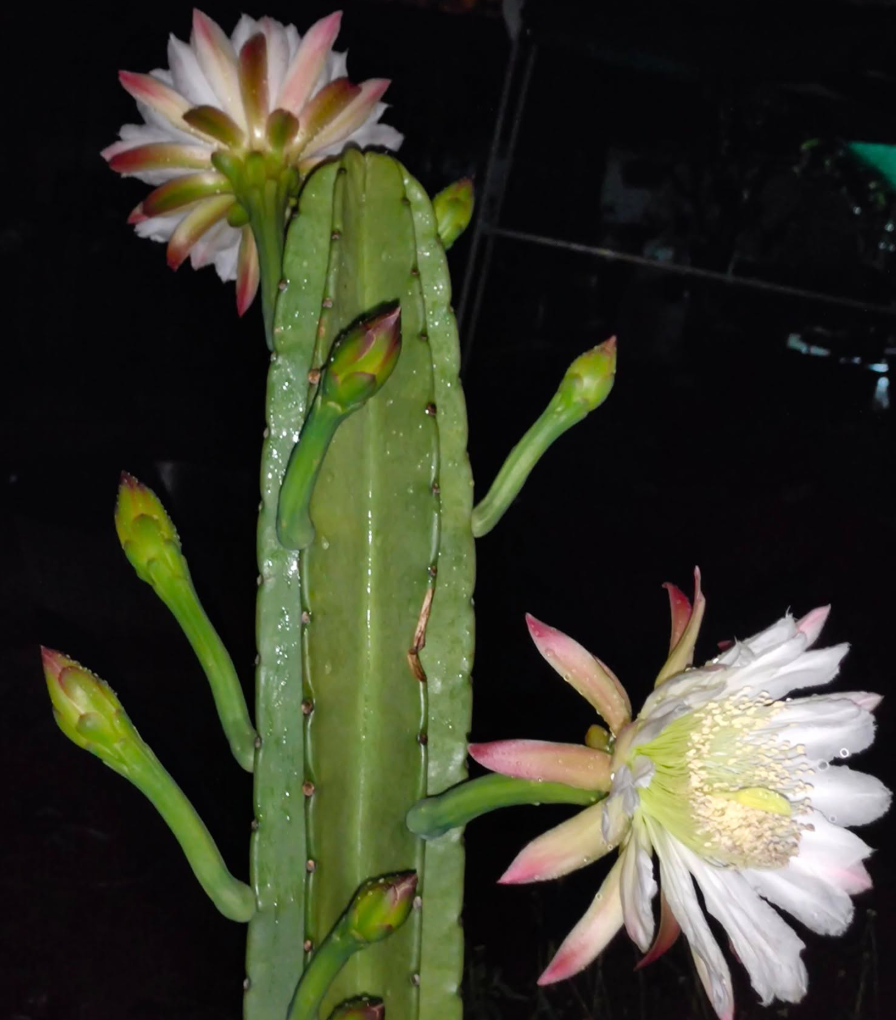
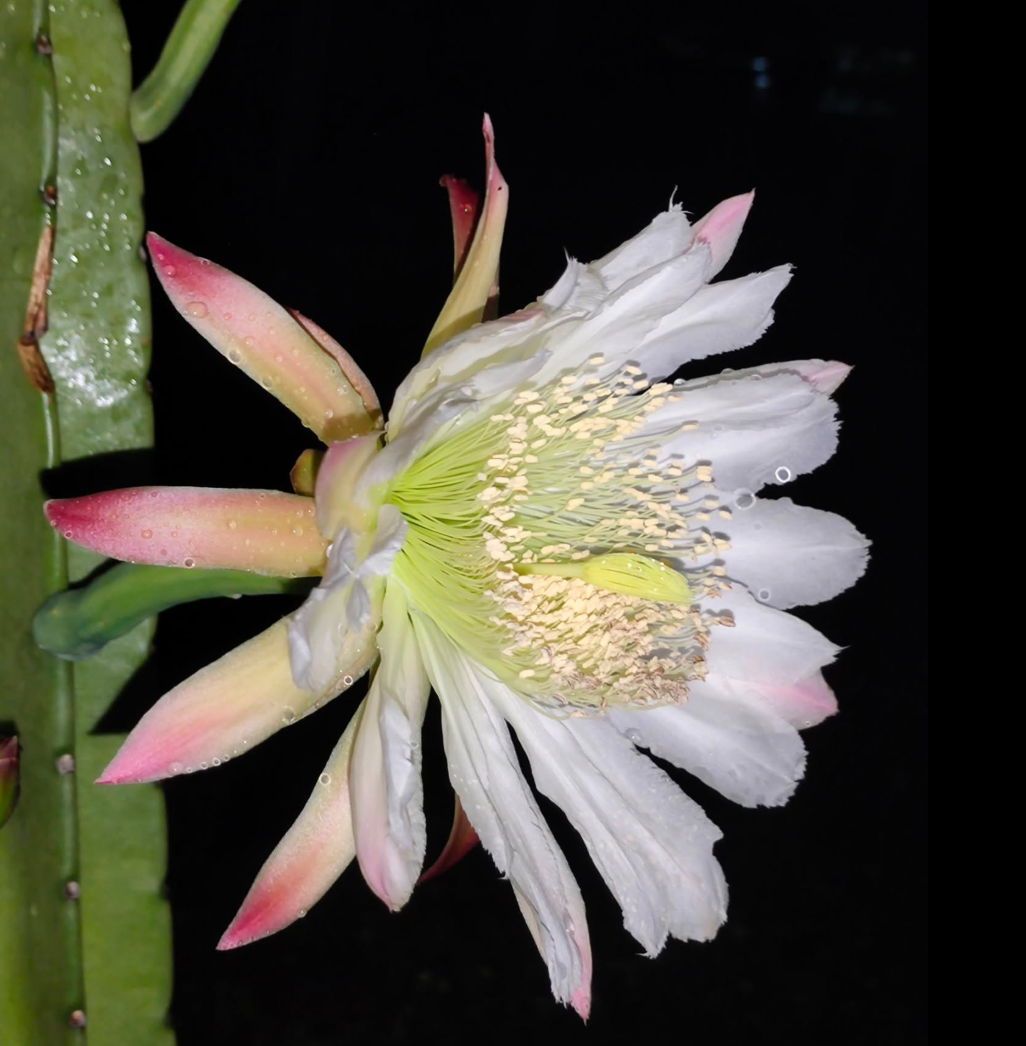
- Large, fragrant, white to creamy flowers that open at night.
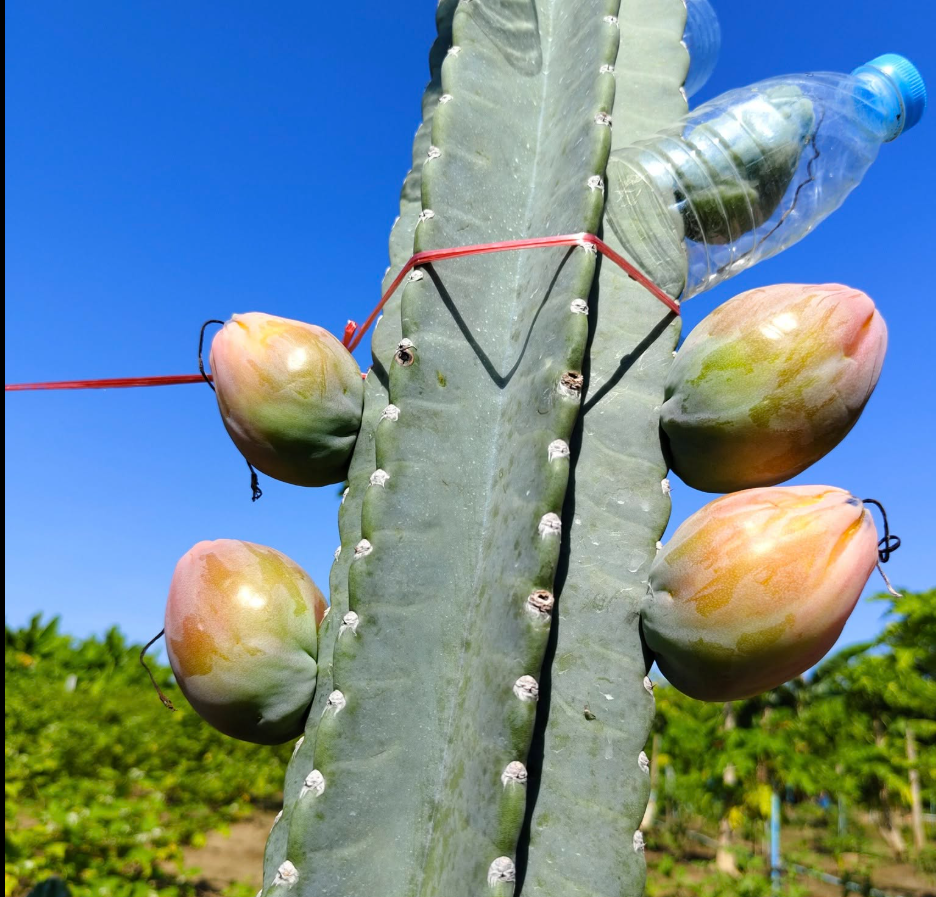
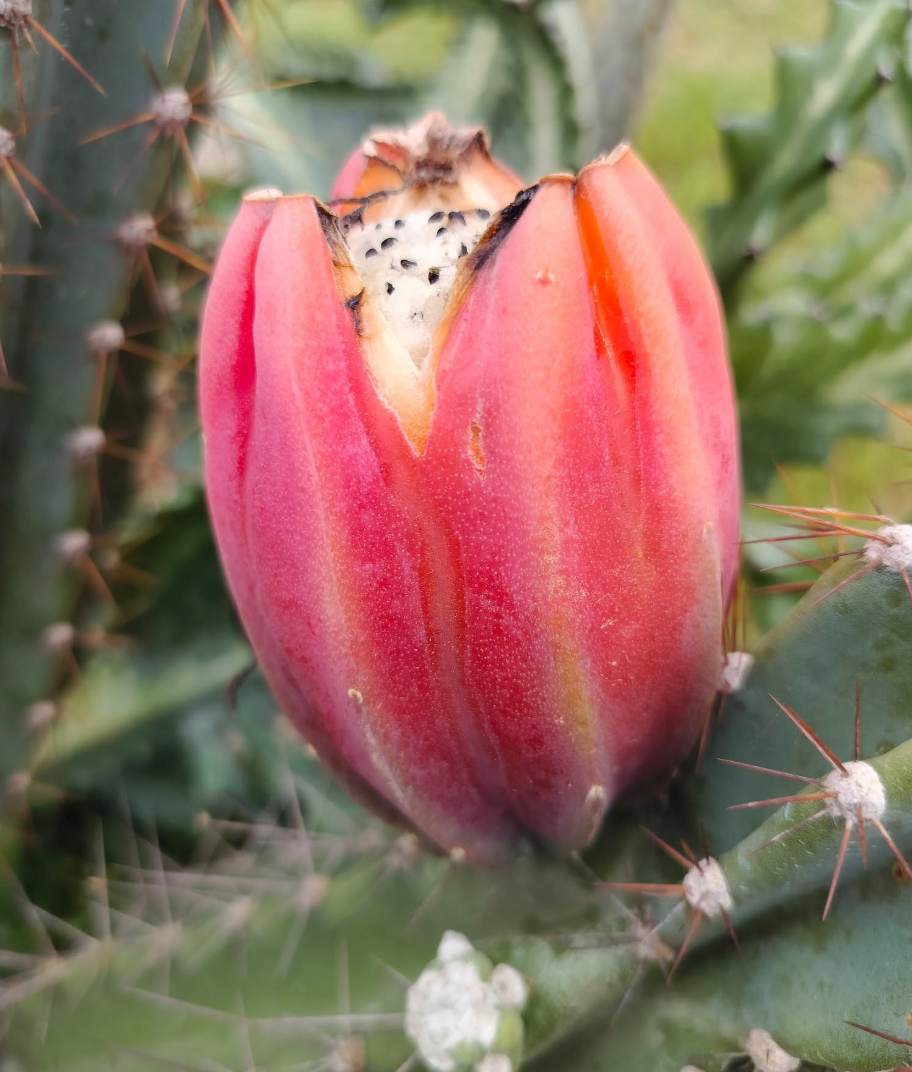
- Fruits develop after flowering—small, round, deep purple to red, sweet pulp with fine seeds (similar to other cacti).
Blooming Behavior
- Bloom time:
Night-blooming—typically around 7 PM to 8 AM. Buds open in the evening and reach full bloom overnight; flowers last about 1–2 days. - Flower characteristics:
- Large blossoms (~15–25 cm diameter)
- White/cream petals with yellow filaments
- Fragrant, attracting pollinators such as bees and other insects
- Bloom cycle:
Each flower blooms once; it does not reopen on subsequent days.
Fruiting
- Pollination
- Fruiting occurs after insect pollination or manual hand-pollination.
- Fruit begins to swell once petals wither, starting as small berry-like forms.
- Fruit development
- Fruits can reach 15–20 cm, turning green to yellowish when mature (varies by form).
- Thick rind with many seeds inside.
- Ripening typically takes about 3–6 months before harvest or natural drop.
- Seed use
- Seeds can be cleaned and sown for propagation.
- Fruits are sometimes used for seed production to maintain collectible lines.

Please rate your satisfaction with this article

Post a Comment
Your email address will not be displayed to others. Required fields are marked *