Garuda Myth & Origins: Kashyapa, Vinata, the Amrita Quest, and Its Role in Thai Culture
Beliefs and Faith › Garuda Myth & Origins: Kashyapa, Vinata, the Amrita Quest, and Its Role in Thai Culture
26 Apr 2025 15:08
History and Legend of the Birth of Garuda
Garuda is a significant semi-divine creature in Hinduism mythology and has been widely revered in Thai culture, both as a symbol of royal authority and in religion.
Origin of Garuda
Sage Kashyapa (King Dasharatha) and His Two Wives
- Sage Kashyapa: In Hindu mythology, Sage Kashyapa is one of the great sages, a son of Brahma, and considered the progenitor of all beings, including gods, demons, humans, nagas, Garuda, and various creatures. In Thai context, he is sometimes associated or compared with King Dasharatha (father of Rama in the Ramayana), symbolizing his importance as a progenitor.
- Vinata (Wimada/Tasi): One of Kashyapa’s many consorts. She is the mother of Garuda and Aruna (the charioteer of the Sun God), known for her virtuous character but suffered due to a gambling loss.
- Kadru (Katree): Another wife of Sage Kashyapa and mother of all nagas (serpent beings), characterized by cunning and deceit, which became the root of conflicts.
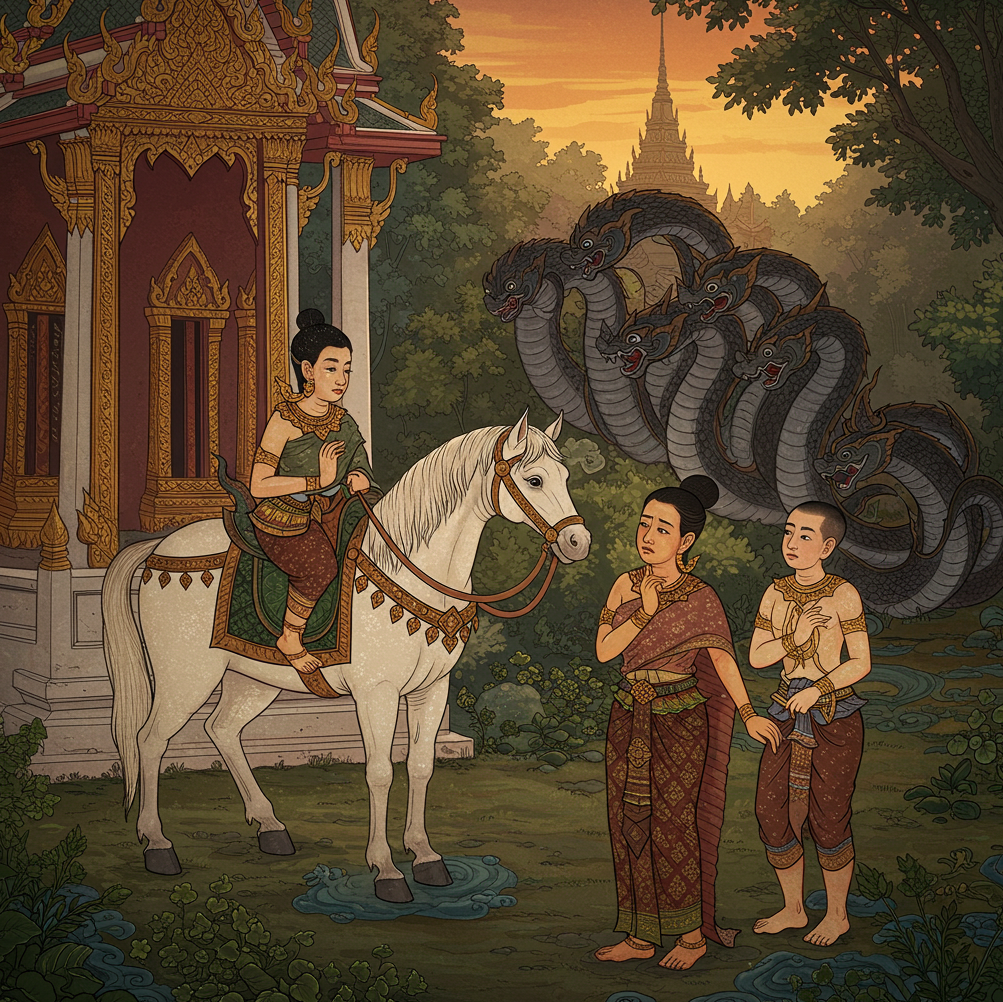
The Gambling and Its Consequences
- The gambling about the color of the celestial horse Uchchaihshravas was the root of the conflict. Vinata believed the horse was pure white, but Kadru tricked her by commanding her naga sons to turn into black hairs on the horse, causing Vinata to lose the bet.
- As a consequence of losing, Vinata and her son Aruna became slaves to Kadru and the nagas, enduring long suffering under their service.
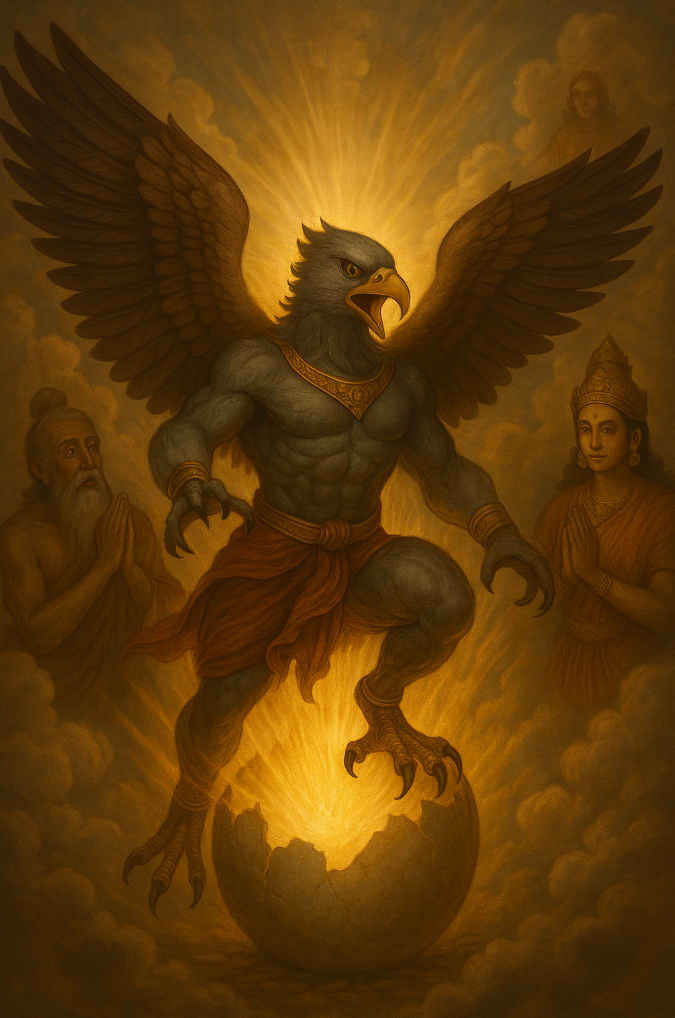
The Conception and Birth of Garuda
- Through the spiritual power of Sage Kashyapa and the devoted austerity of Vinata, Garuda was conceived in her womb.
- Unlike human births, when it was time for Garuda's birth, he emerged radiating brilliant light and immense power. His vast body caused the earth to shake, astonishing gods and sages alike.
- Some legends describe Garuda as having a half-human, half-eagle form, with a strong beak and talons, massive wings capable of stirring storms, and possessing extraordinary strength.
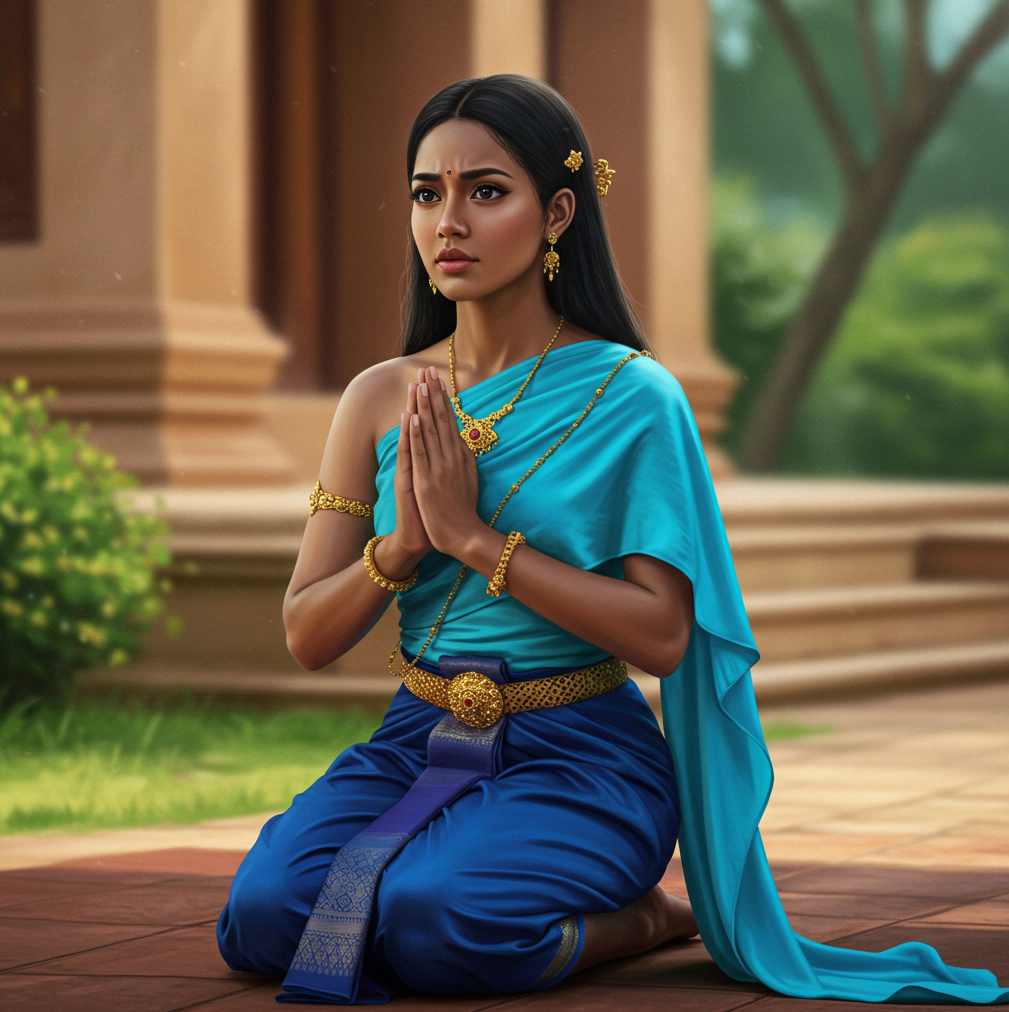
Realization of His Mother's Suffering and the Decision to Help
- As Garuda grew up and learned of his mother’s miserable enslavement, deep filial devotion and rage stirred within him.
- Garuda resolutely decided to free his mother from her bondage, no matter the dangers or challenges he would have to face.
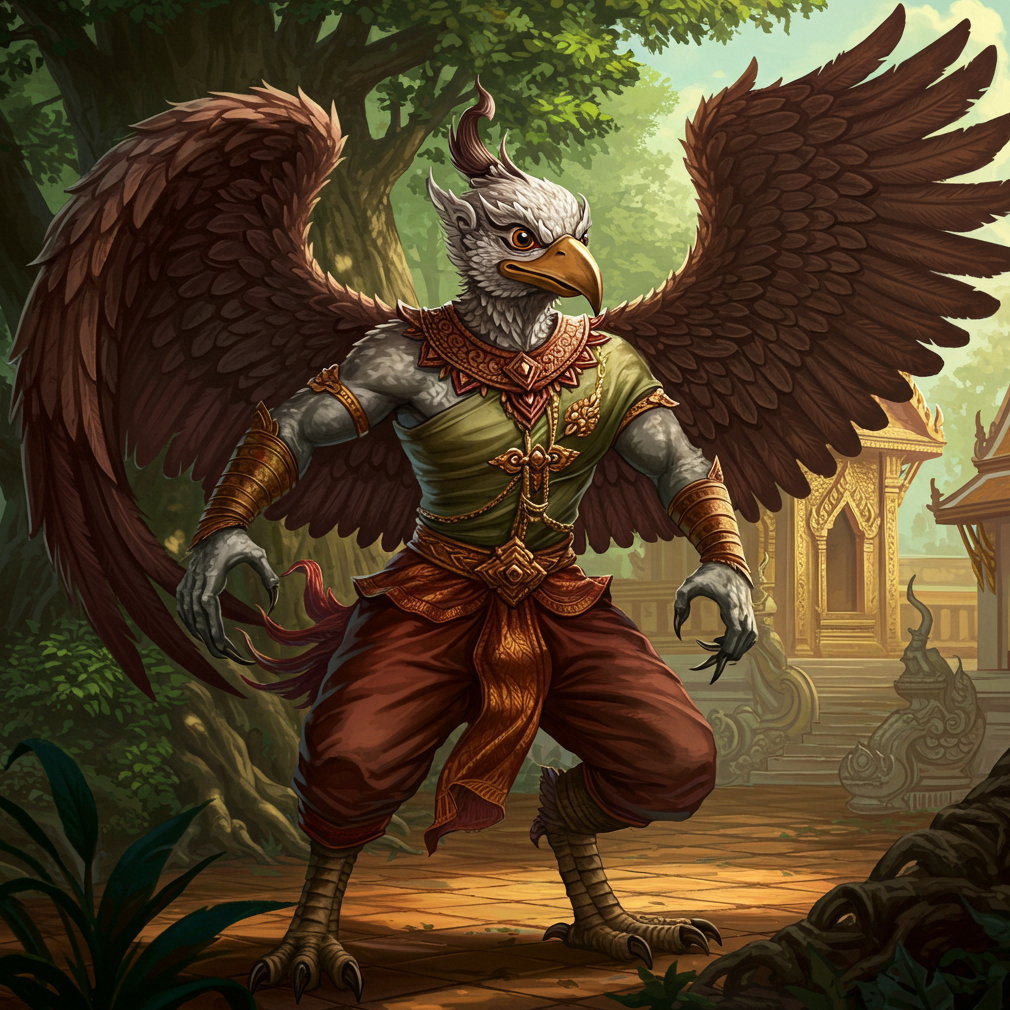
The Journey to Seize the Amrita (Elixir of Immortality)
- The nagas stipulated that to liberate his mother, Garuda must bring the Amrita (elixir of immortality) from the heavens.
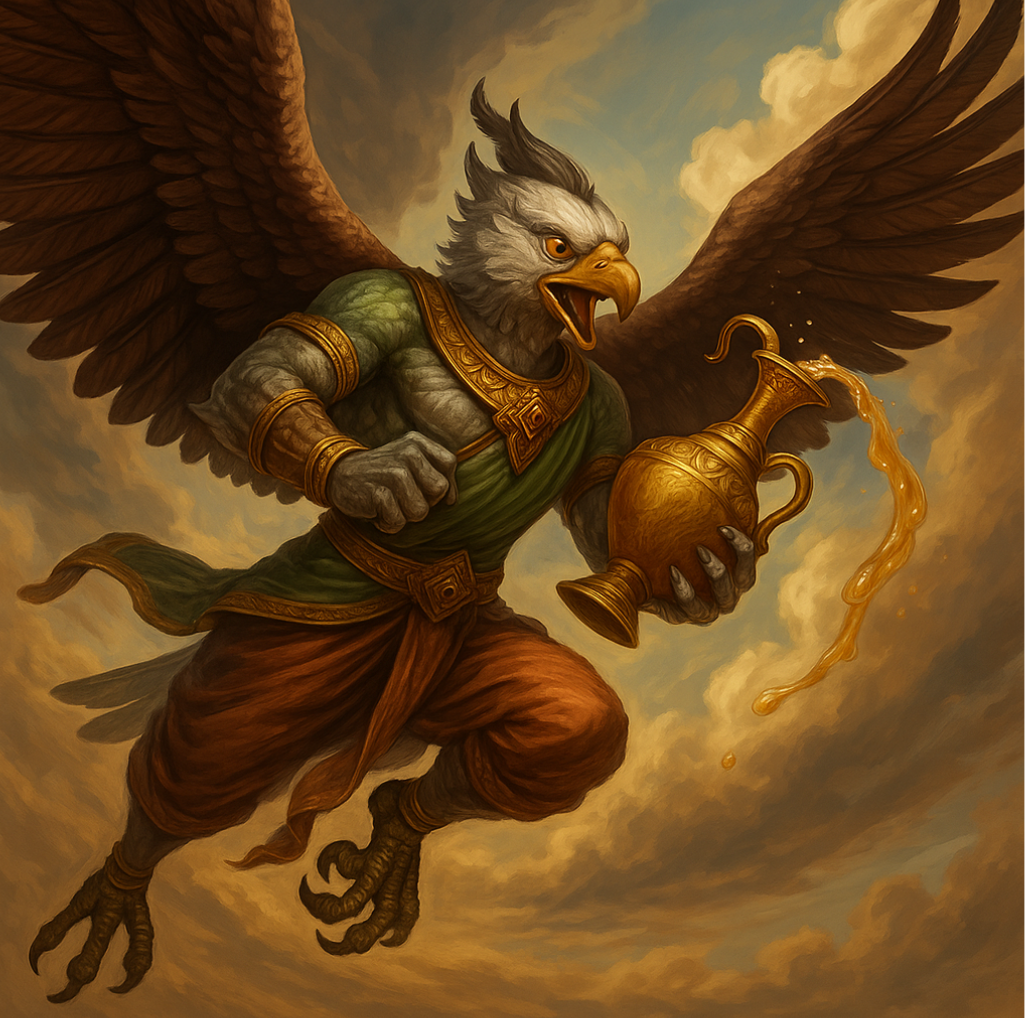
- Thus, Garuda embarked on a perilous journey to seize the Amrita, facing fierce guardians, including the thunderbolt-wielding god Indra.
- Using his unparalleled strength and power, Garuda overcame all obstacles and successfully retrieved the Amrita.
The Agreement and the Nagas' Deception
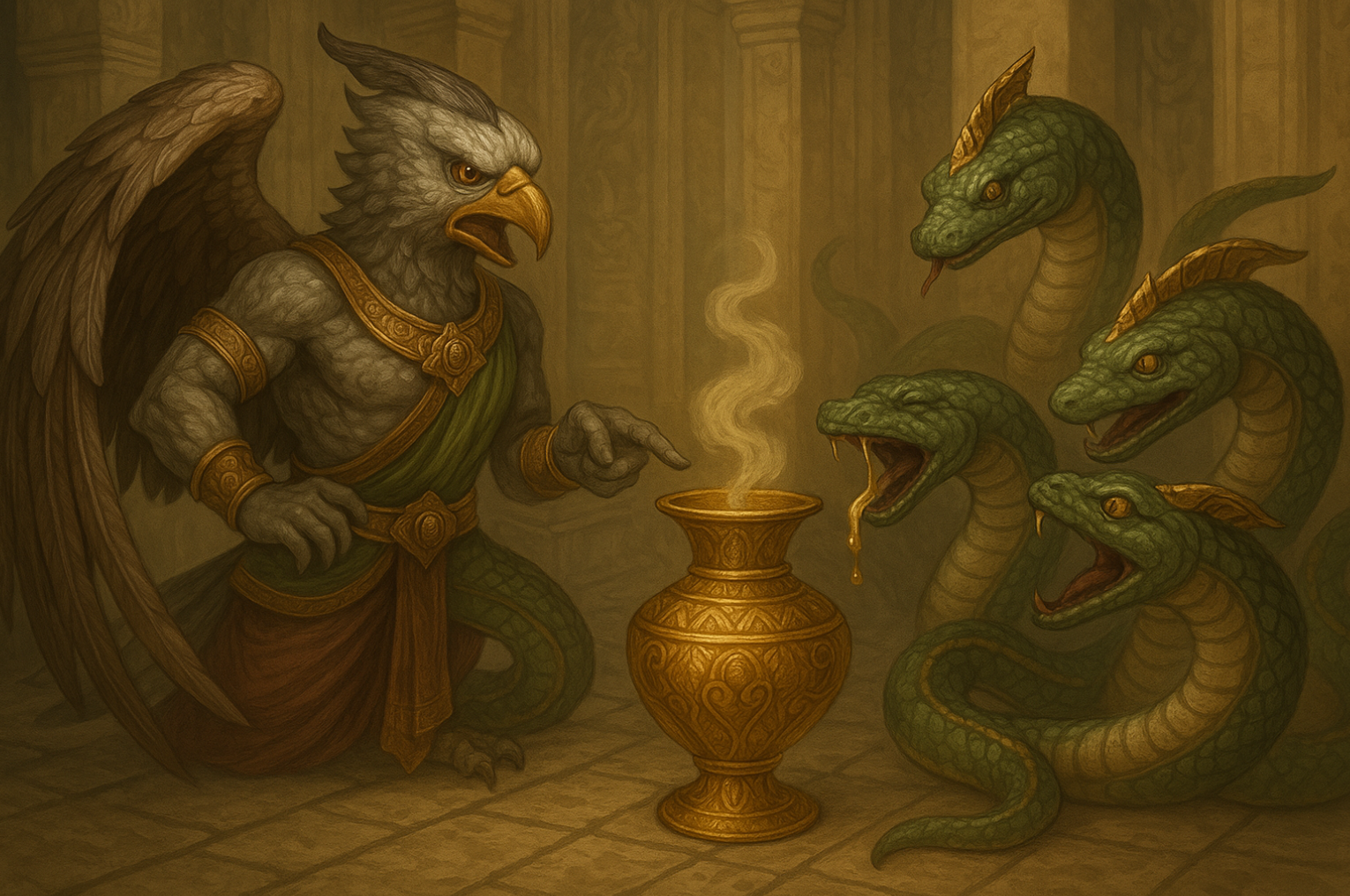
- Upon bringing the Amrita, the nagas tricked Garuda by requesting him to place it on the ground while they performed a ritual. As soon as he did, they rushed to drink it before Garuda could properly free his mother.
- However, by the divine intervention of Vishnu or the sacred power of the Amrita, the nagas only managed to taste it partially. Consequently, their tongues were split by sharp grass, resulting in the forked tongues of nagas seen today (according to some legends).
Receiving Blessings and Becoming Vishnu's Mount
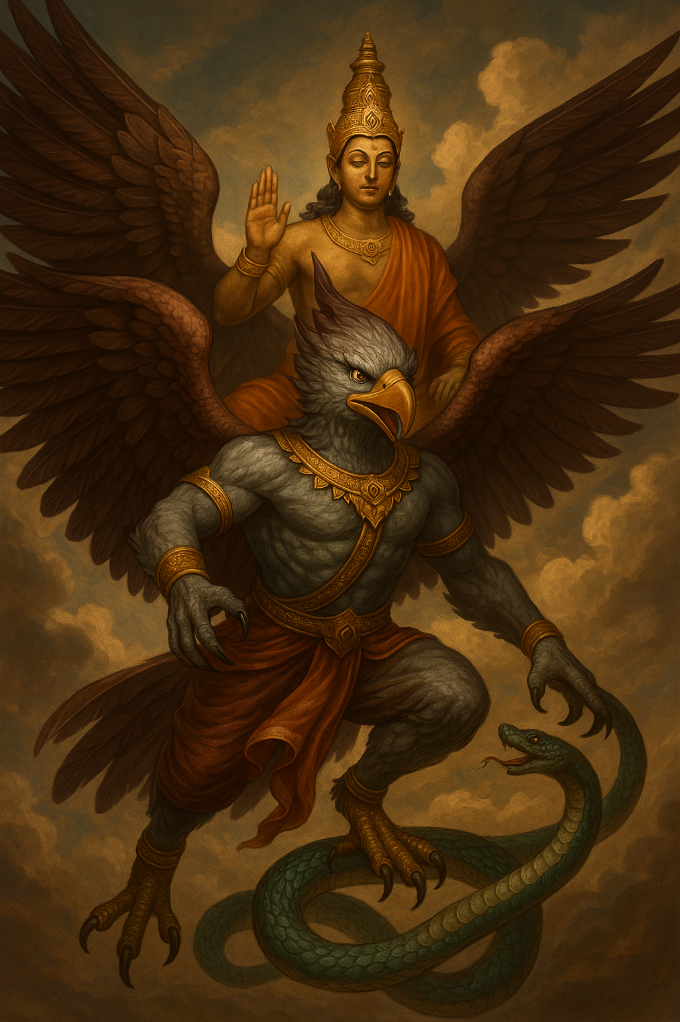
- Impressed by Garuda's bravery, devotion, and power, Vishnu blessed him with immortality without needing to drink the Amrita and granted him the right to prey upon nagas.
- Moreover, Vishnu chose Garuda as his mount, highlighting Garuda’s supreme importance in cosmic order.
Role and Belief in Thai Culture
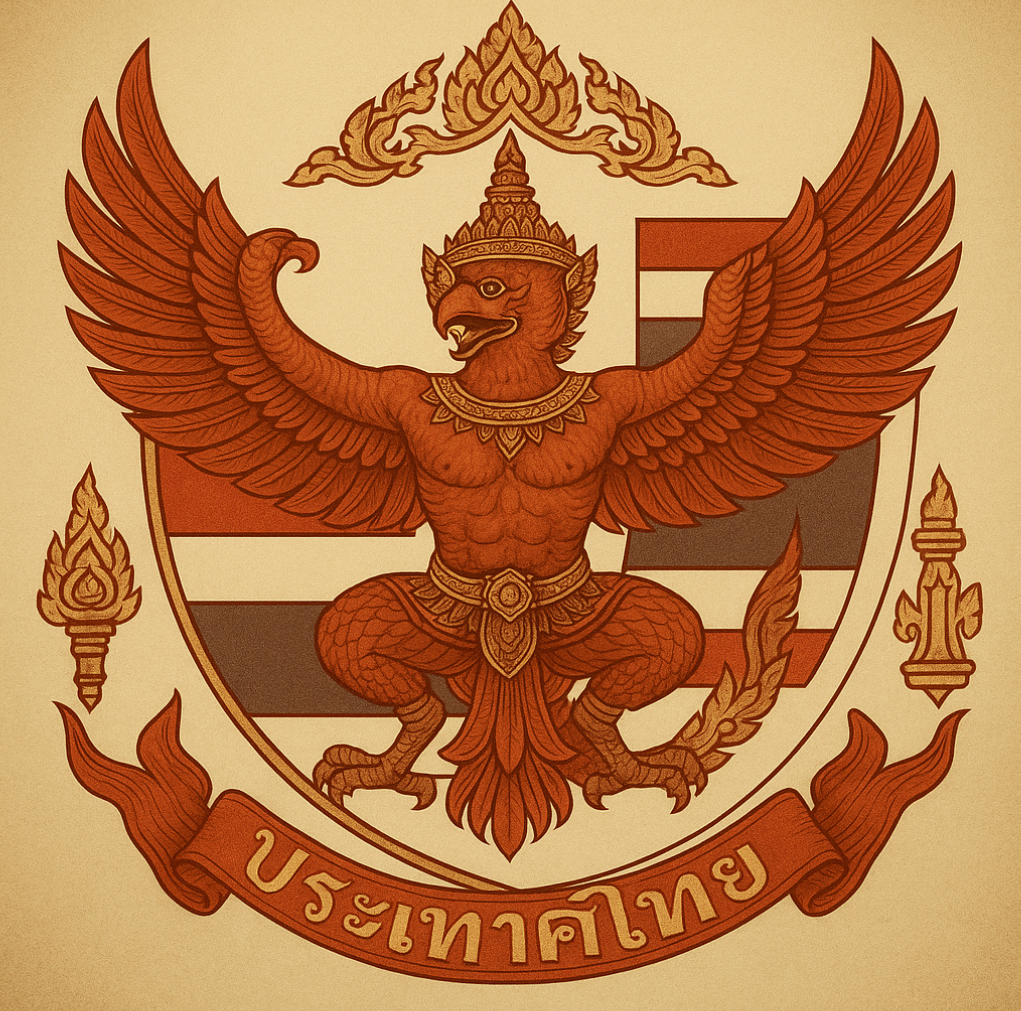
- In Thai culture, Garuda is not merely a mythological creature but is revered as a symbol of the monarchy and state authority, appearing in the national emblem, historical flags, and emblems of various government institutions.
- Belief in Garuda’s protective power against dangers, evils, and black magic is deeply rooted in Thai society, making Garuda statues and images highly popular for worship.
- Garuda is also regarded as a symbol of prosperity, rank, prestige, and loyalty.
Please rate your satisfaction with this article

Post a Comment
Your email address will not be displayed to others. Required fields are marked *
Recommended Content

The History of Phaya Naga is a long-standing story in the cultures of Thailand, Laos, Cambodia, and other Southeast Asi…
Read more
Preta Ghost is a spirit in the belief system of Thai and Buddhist people in Southeast Asia, especially in Thailand, Lao…
Read more
The legend of the Krasue ghost is a traditional folklore that has been passed down for a long time in Thailand and neig…
Read more

Luang Pu Du Phrommapanyo was born into a humble farming family in Ban Sam Khao, Phra Nakhon Si Ayutthaya Province, in t…
Read more
The Millionaire Mantra of Luang Por Ruesi Lingdam is highly popular among those engaged in commerce and trade. Practiti…
Read more
Pop Ghost (Pop) is one of the most famous folk spirits in Thailand, especially in the northeastern and northern regions…
Read more

History and Legend of Mae Nak Phra Khanong Mae Nak Phra Khanong is one of Thailand’s most famous ghost legends. The sto…
Read more

Phra Phuttho Noi is a highly revered and significant Buddhist amulet, created by Khun Mae Boonruen Tongboontum, a laywo…
Read more
Mae Chee Boon Ruan Tong Boon Tem turns fortune into prosperity. Phra Chim Phalee Chant by Mae Chee Boon Ruan Tong Boon …
Read more
aKhun Mae Boonruen Klinphoka (originally named Tongbuntem) was born on Sunday, the 15th day of the 4th month in the Yea…
Read more